How to Tell If You Have a Hidden Water Leak
Hidden water leak? Damp, a rising bill, running-water sound, or low pressure can all be clues. How to put them together in Youngstown, OH.
Referral service — we connect you with an independent local provider. No obligation to proceed.
Most leaks do not start with a flood. They start with something small enough to ignore: a stain you notice and then forget, a bill that is a little higher than last month, a floor that feels damp for no clear reason. On their own, each clue has an innocent explanation. Together, they usually tell a story, and learning to read that story early is the difference between a small repair and a ruined room.
Start with what you can see
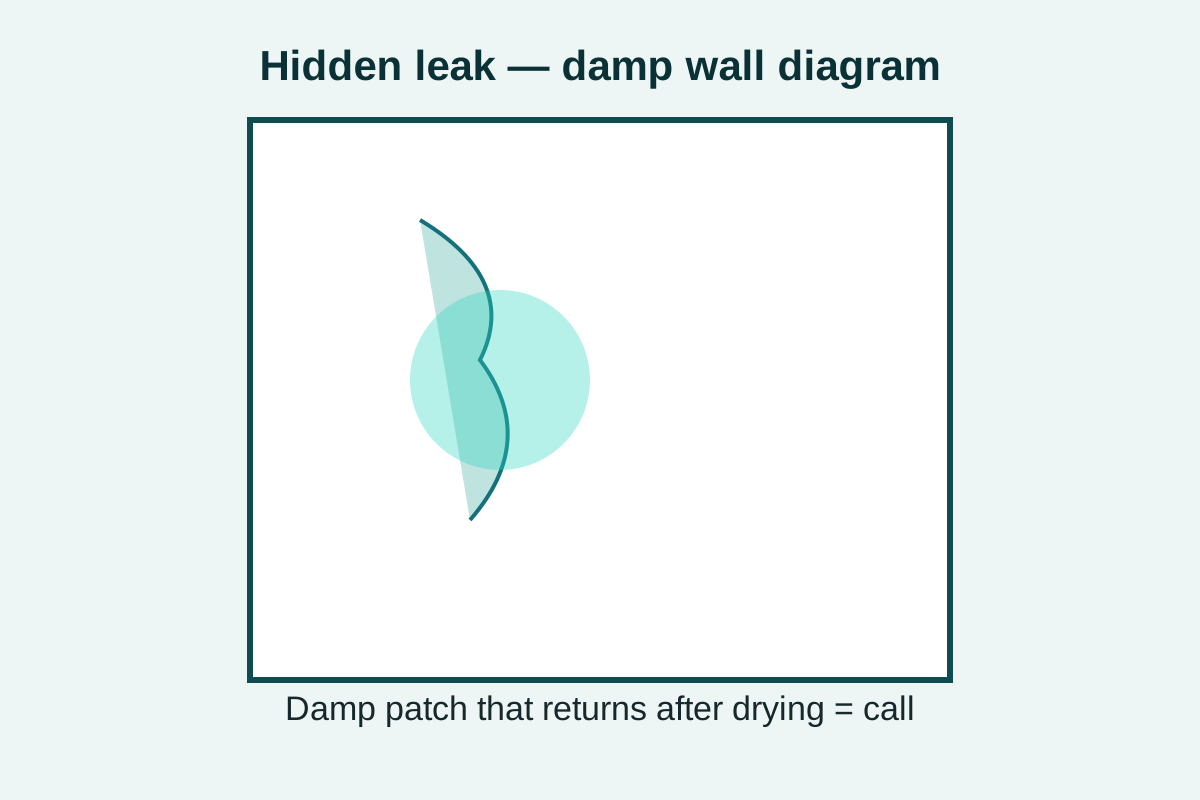
Walk through your home slowly, room by room, and look for the quiet signs. Damp patches on walls or ceilings, paint that bubbles or peels, flooring that lifts or warps in one spot, and mould that returns to the same place after cleaning are all worth noting. Pay special attention to rooms below bathrooms, rooms beside kitchens, and any wall that hides a pipe run. Take a photo of anything you find, with the date — it helps you see whether it is growing, and it helps the provider you call understand what you are dealing with.
Then listen, and check the bill
Two checks cost nothing and catch a surprising number of leaks. First, turn off every tap and appliance, stand quietly near walls and floors, and listen for running, trickling, or hissing water. A house with everything off should be silent. Second, compare your water bills over several months. A steady climb with no change in household size, guests, or habits is one of the most reliable early warnings of a hidden leak, because the meter does not care where the water goes — it only knows it went.
Do the meter test before you call
The meter test is explained step by step in our guide to the water meter leak test: turn everything off, note the reading, wait an hour without using water, and check again. If the reading moved, water is escaping somewhere. That single result turns a vague worry into a concrete fact you can give on the call, and it helps the provider decide which checks to run first.
What does not prove a leak — and what does
Condensation on a cold pipe, a one-off spill, or damp after a heavy storm can all look like a leak and not be one. The pattern that points to a leak is persistence: the same spot, the same smell, the same sound, coming back again and again, or a bill that keeps climbing. If you are unsure, that uncertainty is itself a good reason to call. Describe what you have seen, for how long, and what you have already ruled out, and a local provider can advise whether a visit is the right next step.
When to stop investigating and call
Stop and call promptly if water is actively spreading, if a ceiling is sagging or bulging, if water is near electrics, or if you smell sewage or gas. For gas, leave the building and call 911 or your gas utility first — do not wait for a leak detection visit. For everything else, call (330) 482-8300 and describe your clues. Leak Detection Youngstown is a referral service: we connect you with an independent local provider in the Youngstown area, and that provider handles diagnosis and any repair discussion directly with you.
Not sure where the leak is? Start with a call.
Tell us what you can see, hear, or smell, and we will connect you with an available local provider.
Call (330) 482-8300Frequently asked questions
How long can a hidden leak go unnoticed?
Weeks or even months, especially if it is small and inside a wall or under a floor. That is why a rising bill or a returning damp patch matters even when it looks minor.
Will I need to tear out a wall to find it?
Not usually at the detection stage. Providers use listening equipment, moisture meters, and pressure tests to narrow the location first, so any opening is small and in the right place.
Should I call if I only have one sign?
Yes, if that sign persists. One returning damp patch or one unexplained bill jump is enough to justify a call and, at minimum, a meter test.