Underground Pipe Leak Detection in Youngstown, OH
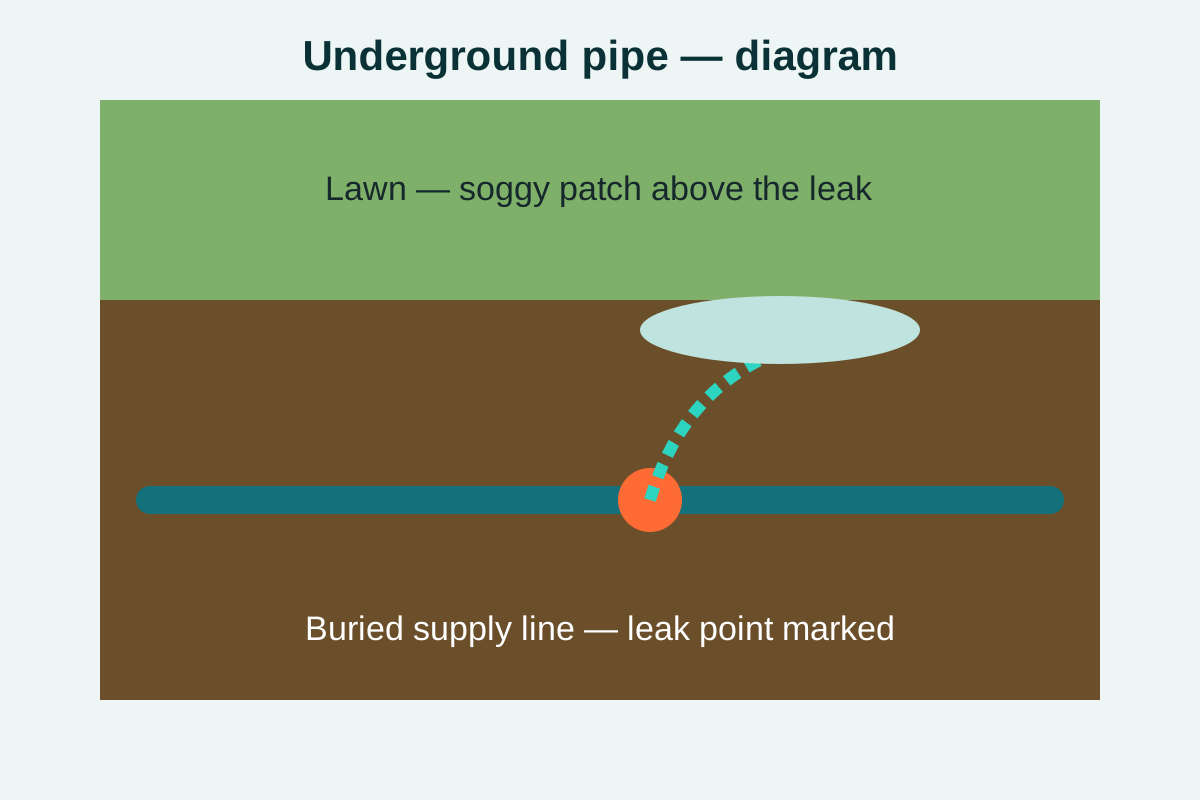
Underground leaks are easy to miss because the pipe itself is out of sight. The clues are usually at the surface: a soggy patch that never dries, a dip in the lawn, low water pressure indoors, or a bill that rises while your usage stays the same. If you are in Youngstown and noticing any of these, call (330) 482-8300.
Referral service — we connect you with an independent local provider. No obligation to proceed.
What this service covers
Underground leaks are easy to miss because the pipe itself is out of sight. The clues are usually at the surface: a soggy patch that never dries, a dip in the lawn, low water pressure indoors, or a bill that rises while your usage stays the same. If you are in Youngstown and noticing any of these, call (330) 482-8300.
Underground pipe leak detection covers the main supply line to a home, outdoor lines to spigots and outbuildings, and buried sections between buildings. Locating the leak before digging matters, because an underground line can run a long way and digging in the wrong place wastes time and money.
Signs to watch for
- A patch of ground that stays wet, soft, or sunken
- Grass that grows faster and greener in one strip or patch
- Low pressure throughout the house, or at outdoor taps
- Air or sputtering when a tap is first opened
- A water bill that climbs with no change in household use
How detection usually works
Providers typically start at the meter and main shut-off, test pressure in sections, and then use acoustic listening and ground-level moisture checks to follow the line. Marking the suspected location on the surface lets repair work start in the right place, rather than trenching along the whole run.
Why this kind of leak is easy to miss
Underground leaks hide in plain sight. The lawn looks greener in one strip, the ground stays soft after dry weather, or the pressure drops just enough to notice in the shower — none of which screams leak on its own. In Youngstown, where winters freeze and thaw the ground, a line that survived last year can fail this year without any obvious event. When the meter moves with all taps off, the ground is telling you something.
What to tell us when you call
- Where you first noticed it — which room, wall, floor, or patch of ground.
- How long it has been there, and whether it is getting worse.
- Any bill change, pressure change, sound, or smell that came with it.
- Whether you have shut off a valve, and which one.
After the leak is found
After the location is marked, repair planning becomes much more concrete: how deep the line is, what it runs under, and whether a section replacement or a reroute makes more sense. A marked location also lets you compare options fairly, because every provider is pricing the same spot, not a different guess.
How to lower the chance of the next one
For buried lines, the best prevention is awareness: know roughly where your main line runs, protect outdoor taps and exposed sections before winter, and do not ignore a soft or sunken patch of ground. A quick meter check each season is a cheap way to catch the next underground leak early.
Not sure this is the right service? Read how to tell if you have a hidden water leak, or call (330) 482-8300 and describe it — we will connect you with a local provider who can help you narrow it down.
Other leak detection services
- Emergency Leak Detection
- Water Leak Detection
- Slab Leak Detection
- Sewer Line Leak Detection
- Pipe Leak Repair
- Commercial Leak Detection
Areas served
- Leak Detection in Boardman, OH
- Leak Detection in Austintown, OH
- Leak Detection in Canfield, OH
- Leak Detection in Poland, OH
- Leak Detection in Struthers, OH
Neighbourhoods in Youngstown are listed with ZIP codes on the service areas page: Downtown 44503, North Side 44504, East Side 44505, South Side 44507, West Side 44509, and Cornersburg 44511.
Think this is your leak? Call now.
Tell us what you can see, hear, or smell, and we will connect you with an available local provider.
Call (330) 482-8300Frequently asked questions
How do I know the leak is underground and not inside?
If indoor fixtures, walls, and floors are dry but the meter moves with all taps off, or the ground outside is wet, an underground line is a strong suspect. A provider can isolate indoor and outdoor sections to confirm.
Can an underground leak affect my foundation?
Ongoing water near a foundation can cause damp and soil movement over time, which is why a suspected underground leak should be checked promptly rather than left to run.
Do I need to mark anything before the visit?
If you know roughly where the main line runs, or where outdoor taps and shut-offs are, tell the provider on the call. It helps, but it is not required — they will trace the line themselves.