Commercial Leak Detection in Youngstown, OH
A leak in a business property carries a different kind of cost: closed rooms, damaged stock, unhappy tenants, and a bill that lands on the business rather than a household budget. If you manage or own commercial space in Youngstown and suspect a leak, call (330) 482-8300 and describe the property and the signs.
Referral service — we connect you with an independent local provider. No obligation to proceed.
What this service covers
A leak in a business property carries a different kind of cost: closed rooms, damaged stock, unhappy tenants, and a bill that lands on the business rather than a household budget. If you manage or own commercial space in Youngstown and suspect a leak, call (330) 482-8300 and describe the property and the signs.
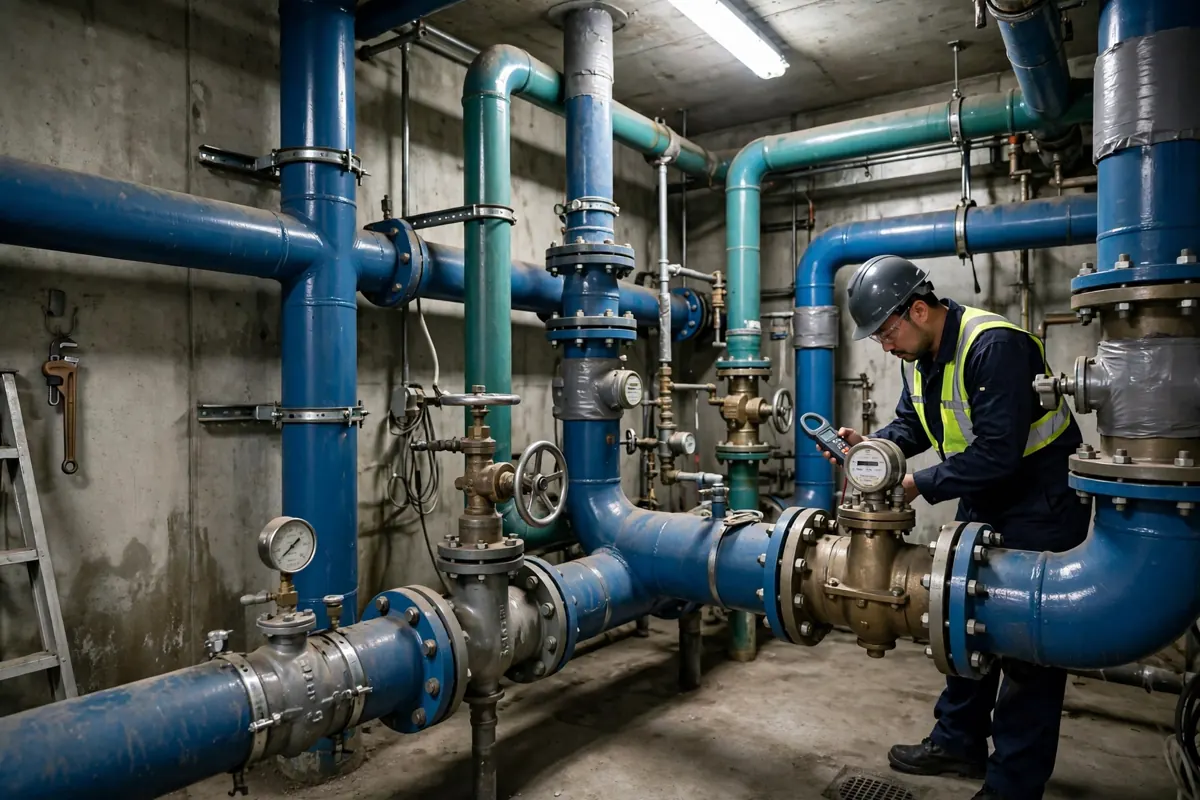
Commercial leak detection covers shops, offices, restaurants, warehouses, and multi-unit buildings, where pipe runs are longer, meter setups differ, and a leak in one unit can show up in another. A local provider can work through the building systematically, starting from the meter and the areas showing damage.
Signs to watch for
- Water damage in a unit below or beside the suspected source
- A commercial water bill that jumps without a change in trading
- Damp, staining, or mould in storerooms, corridors, or ceilings
- Low pressure across a whole floor or building section
- Tenants or staff reporting drips, smells, or damp in the same area
How detection usually works
For larger properties, detection usually starts with meter and zone isolation — splitting the building into sections to find which one is losing water — followed by acoustic, thermal, and moisture checks within that zone. That staged approach avoids opening up a whole building to chase one leak.
Why this kind of leak is easy to miss
In a business property, a leak rarely stays a plumbing problem for long. It becomes a closed room, damaged stock, a tenant complaint, or a bill that lands in the middle of a tight month. Because commercial pipe runs are longer and serve more people, a leak in one area can also show up far from its source, which makes the first description you give — which units, which floors, what changed — especially valuable.
What to tell us when you call
- Where you first noticed it — which room, wall, floor, or patch of ground.
- How long it has been there, and whether it is getting worse.
- Any bill change, pressure change, sound, or smell that came with it.
- Whether you have shut off a valve, and which one.
After the leak is found
After detection in a commercial building, the provider should be able to say which zone or section is losing water, so repair can be planned around trading hours and tenant access rather than closing the whole building. Ask about staging: what can be done now, what can wait for an agreed window, and what access each stage needs.
How to lower the chance of the next one
For managers, the best long-term habit is a simple one: a monthly meter reading, a log of tenant leak reports, and a note of which zones have failed before. Patterns in that log will often point to the next problem area before it becomes an emergency.
Not sure this is the right service? Read how to tell if you have a hidden water leak, or call (330) 482-8300 and describe it — we will connect you with a local provider who can help you narrow it down.
Other leak detection services
- Emergency Leak Detection
- Water Leak Detection
- Slab Leak Detection
- Sewer Line Leak Detection
- Underground Pipe Leak Detection
- Pipe Leak Repair
Areas served
- Leak Detection in Boardman, OH
- Leak Detection in Austintown, OH
- Leak Detection in Canfield, OH
- Leak Detection in Poland, OH
- Leak Detection in Struthers, OH
Neighbourhoods in Youngstown are listed with ZIP codes on the service areas page: Downtown 44503, North Side 44504, East Side 44505, South Side 44507, West Side 44509, and Cornersburg 44511.
Think this is your leak? Call now.
Tell us what you can see, hear, or smell, and we will connect you with an available local provider.
Call (330) 482-8300Frequently asked questions
Can detection be done without closing the business?
Often, yes, at least for the detection stage, which is usually non-invasive. The provider can discuss timing and access with you on the call, including out-of-hours options if your business needs them.
Who should call — the tenant or the owner?
Either can call to start the conversation, but repair decisions and costs are normally agreed with the property owner or manager. If you are a tenant, tell your landlord or manager as well.
Does this cover multi-unit buildings?
Yes. Leaks in multi-unit buildings are a common commercial case, because water travels between units. Tell the provider which units show damage and which show the source signs, if you know.