Pipe Leak Repair in Youngstown, OH
Finding a leak is only the first half of the job. Pipe leak repair is the work that stops it: replacing a failed section, fixing a joint, or rerouting a line that has reached the end of its life. If you already know where your leak is, or you have just had one located, call (330) 482-8300 to connect with a local provider in Youngstown.
Referral service — we connect you with an independent local provider. No obligation to proceed.
What this service covers
Finding a leak is only the first half of the job. Pipe leak repair is the work that stops it: replacing a failed section, fixing a joint, or rerouting a line that has reached the end of its life. If you already know where your leak is, or you have just had one located, call (330) 482-8300 to connect with a local provider in Youngstown.
The right repair depends on the pipe material, where it sits, how bad the damage is, and whether the same section has failed before. A provider who has seen the leak can explain the options in plain terms, including what each option involves and what it will disrupt, so you can agree a plan before work starts.
Signs to watch for
- A visible drip or spray from a pipe joint or fitting
- Corrosion, green staining, or flaking on copper pipes
- A pipe that has frozen, burst, or split
- Repeated leaks on the same run of pipe
- Water damage around a pipe that keeps coming back after a patch
How detection usually works
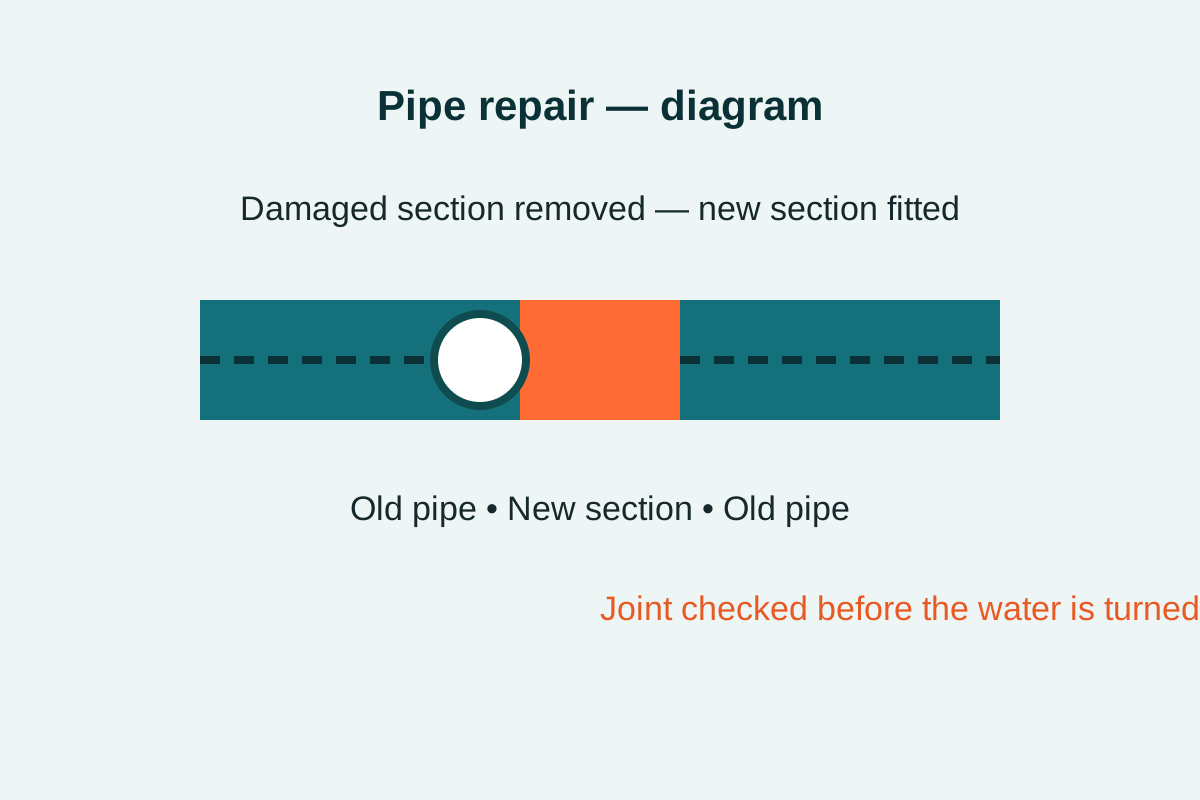
After detection and diagnosis, repair usually means isolating that section, draining it, and then cutting out the damaged part, resealing a joint, or replacing the run. The provider will discuss materials and access with you first, especially where a pipe runs through a finished wall or under a floor.
Why this kind of leak is easy to miss
Pipe repairs go wrong most often when the cause is skipped. A joint can be resealed, a section replaced, and the drip stopped, only for the same run to fail again a few months later because pressure, corrosion, freezing, or a poor original joint was never addressed. That is why a repair visit should start with why this pipe failed, not just where.
What to tell us when you call
- Where you first noticed it — which room, wall, floor, or patch of ground.
- How long it has been there, and whether it is getting worse.
- Any bill change, pressure change, sound, or smell that came with it.
- Whether you have shut off a valve, and which one.
After the leak is found
After repair, ask what was replaced, what material was used, and what to watch for in the first weeks — a new damp spot, a change in pressure, or a joint that weeps. A clear answer to those three questions is a good sign that the repair was done properly, and it gives you a baseline if anything changes.
How to lower the chance of the next one
The simplest prevention is also the least glamorous: lag exposed pipes before winter, keep the home heated during cold snaps, and fix small drips before they become corrosion points. In older Youngstown homes, a periodic look at visible pipework in basements and utility areas is time well spent.
Not sure this is the right service? Read how to tell if you have a hidden water leak, or call (330) 482-8300 and describe it — we will connect you with a local provider who can help you narrow it down.
Other leak detection services
- Emergency Leak Detection
- Water Leak Detection
- Slab Leak Detection
- Sewer Line Leak Detection
- Underground Pipe Leak Detection
- Commercial Leak Detection
Areas served
- Leak Detection in Boardman, OH
- Leak Detection in Austintown, OH
- Leak Detection in Canfield, OH
- Leak Detection in Poland, OH
- Leak Detection in Struthers, OH
Neighbourhoods in Youngstown are listed with ZIP codes on the service areas page: Downtown 44503, North Side 44504, East Side 44505, South Side 44507, West Side 44509, and Cornersburg 44511.
Think this is your leak? Call now.
Tell us what you can see, hear, or smell, and we will connect you with an available local provider.
Call (330) 482-8300Frequently asked questions
Should I try a temporary patch first?
A temporary patch can slow a drip, but it is not a repair. If water is still escaping, keep the area as dry as you can, shut off the section if possible, and arrange a proper repair promptly.
Will the provider repair the leak they find?
The independent provider you are connected with can discuss repair directly with you. Detection and repair may be handled in the same visit or scheduled separately, depending on the leak and the parts needed.
How do I prevent the next leak on the same pipe?
Ask the provider what caused this failure — age, corrosion, pressure, freezing, or a poor joint — because the prevention step is different for each. That conversation is part of agreeing the repair.