Slab Leak Signs in Youngstown Homes
Warm floors, damp carpet, or a water heater that never rests? Slab leak signs in Youngstown homes, and how to tell them from ordinary wear.
Referral service — we connect you with an independent local provider. No obligation to proceed.
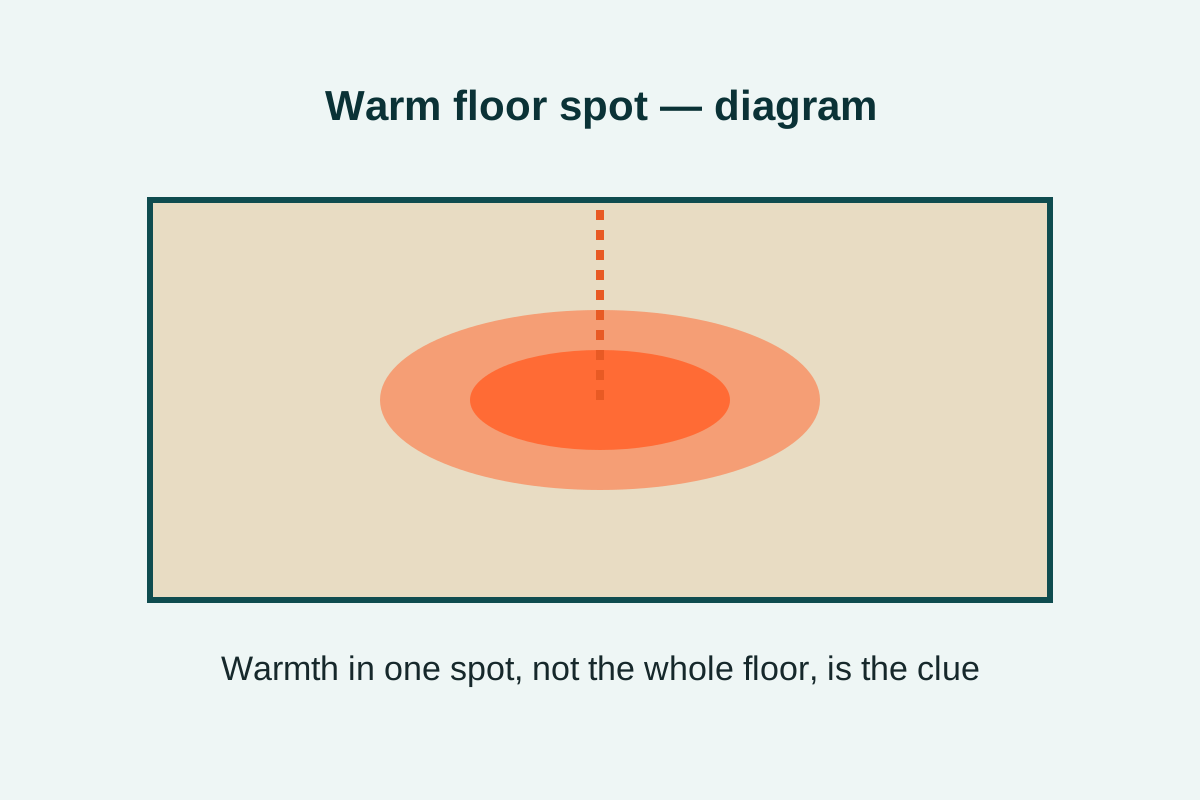
A slab leak is a leak in a pipe running under a concrete slab floor, and it has a reputation for a reason: it is hard to see, easy to misread, and expensive to ignore. In Youngstown, where many homes sit on slabs or have slab sections, the signs are worth knowing by name, because the earlier you recognise them, the less floor, finish, and money the leak can take.
The warm spot that should not be warm
The classic slab leak sign is a warm or hot patch on the floor, often in a room with no heating vent nearby. It happens when a hot-water line under the slab leaks, warming the concrete above it. A warm floor on its own is not proof — underfloor heating, a sunny room, or a nearby hot pipe can all warm a floor — but warmth that appears in the same spot, stays there, and comes with damp, sound, or a rising bill is a different matter. Note exactly where it is, and whether it changes through the day.
Damp carpet, lifting floors, and cracks
Water under a slab has to go somewhere, and it usually goes up. Carpet that stays damp in one area, laminate or tile that lifts or cracks in a pattern, and new cracks in flooring or at wall bases can all follow a slab leak. These signs are often blamed on spills, pets, or age, which is why they get painted over or covered with a rug. If the damp returns after drying, or the flooring damage spreads from one spot, stop covering it and start documenting it.
The water heater that never rests
A hot-water system that runs far more often than it used to, or that you hear cycling when nobody has used hot water, can point to a hot line losing water under the slab. The same logic applies to the bill: a slab leak is a leak that runs all day, every day, so even a small one adds up. Compare bills, listen for the heater, and put those two clues together with any warm or damp floor signs.
How a provider actually finds it
Because the pipe is buried, a slab leak visit is mostly testing, not digging. A provider will typically isolate hot and cold lines, pressure-test each section, and use acoustic listening and thermal imaging to narrow down which line and roughly where. Our slab leak detection page explains that process in more detail. Only after the location is narrowed down should repair options be discussed, because the repair for a leak under a garage and a leak under a finished living room can be very different jobs.
What to do while you wait
Limit hot-water use if a hot line is suspected, avoid running appliances you do not need, and keep the affected floor as dry as you can. If water is visibly spreading, shut off the main valve if it is safe to do so. Then call (330) 482-8300 with your notes: where the warm or damp spot is, when you first noticed it, and what the bill and water heater have been doing. That description helps a local provider plan the right tests for your home.
Not sure where the leak is? Start with a call.
Tell us what you can see, hear, or smell, and we will connect you with an available local provider.
Call (330) 482-8300Frequently asked questions
Are slab leaks common in Youngstown?
They occur in slab-built homes everywhere, including Youngstown, and older pipework, ground movement, and freeze-thaw cycles can all contribute. The signs above, not the age of the home alone, are what matter.
Does finding a slab leak mean breaking the whole floor?
No. Detection narrows the location first, and repair is then discussed for that spot or line. Some repairs reroute a line rather than opening the slab.
Can I just turn the water off and leave it?
Turning off the water stops the leak, but it does not fix the pipe, and a home without water is not a long-term solution. Use shut-off as a short-term step while you arrange a visit.